Quick Answer
A resistor is a simple but essential electronic component that controls current flow and voltage levels in circuits. You can use it to protect sensitive components, adjust signal strength, or divide power—just match the resistance value (measured in ohms) to your project’s needs using a multimeter or color code chart.
Key Takeaways
- Always double-check resistor color codes before soldering—use a chart app or online tool
- Use resistors in series with LEDs; never connect them directly to high-voltage sources
- When in doubt, pick a slightly higher resistance value—it’s safer than too low
- Protecting LEDs from excessive current
- Setting input thresholds in analog sensors
Troubleshooting & Solutions
Common Problems & Solutions
Why this happens
Too much current is flowing through the LED because no resistor is used or the resistor value is too low, causing overheating and failure.
How to fix it
- 1Disconnect the power supply immediately
- 2Check if a resistor is present in series with the LED
- 3Replace with a 220Ω to 1kΩ resistor depending on LED specs and voltage
Mistakes to avoid
- Using a resistor rated for lower wattage than required
- Confusing anode and cathode polarity while installing
Frequently Asked Questions
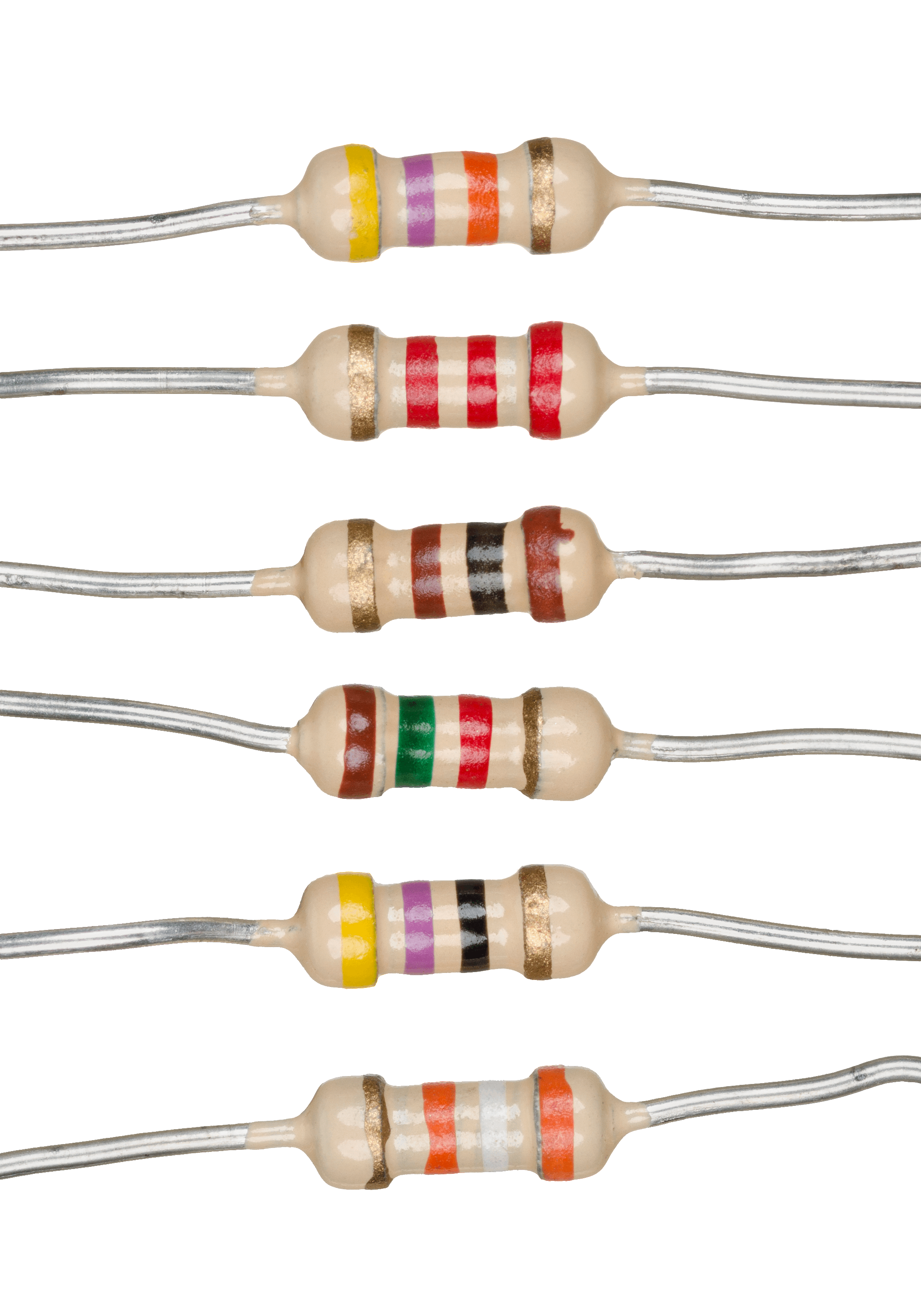
The colored bands represent the resistance value and tolerance. Use a resistor color code chart to decode them—for example, brown-black-red-gold means 1 kΩ ±5%.
Sources & References
- [1]Resistor — Wikipedia
Wikipedia, 2026